
Transformation Lifecycle | Value & Performance
New Software, Same Problems: Why the Business Didn't Improve
November 15, 2026
By Jon Lenox
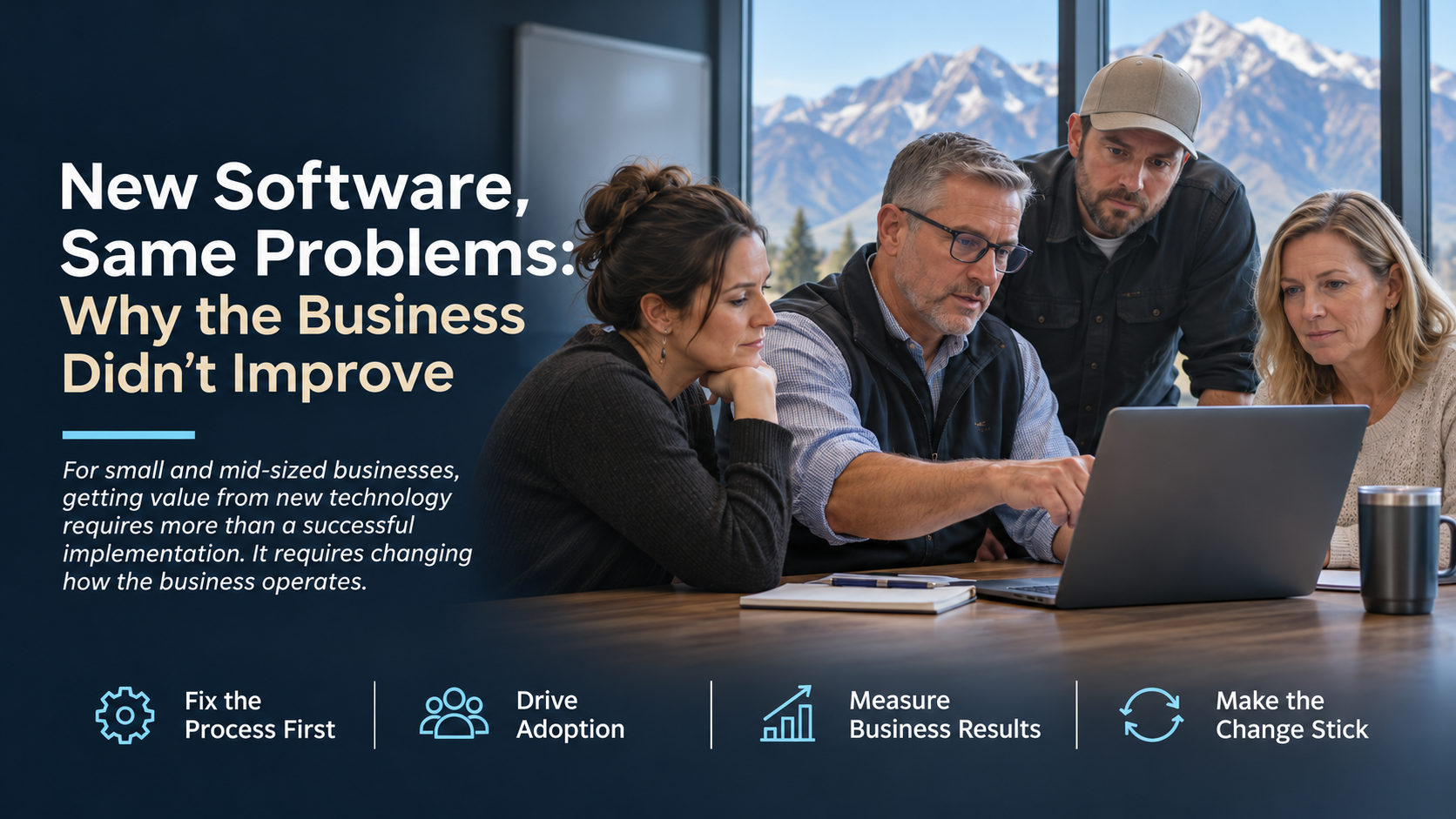
For small and mid-sized businesses, getting value from new technology requires more than a successful implementation. It requires changing how the business operates.
The Software Works. So Why Hasn't the Business Improved?
Consider an established service company investing in new scheduling and job-management software. Scheduling takes too long, technicians aren't being used efficiently, invoices go out late, and job profitability is difficult to track. A new system promises to fix these problems.
The company selects a vendor, implements the software, trains employees, and launches on schedule.
Three months later, dispatchers still coordinate jobs through text messages. Technicians keep separate notes, and accounting still relies on spreadsheets to reconcile information before invoicing.
The software works, but the problems that justified the investment remain. Now the business is paying for new technology while absorbing the costs of its old processes.
Businesses spend considerable time selecting and implementing software. Far less attention goes toward changing daily operations so the investment actually pays off.
The real question is straightforward: Is the business operating better because of the investment?
If not, the technology project may be finished, but the business still has work to do.
Why Employees Keep Using the Old Process
When employees continue using spreadsheets or workarounds, it's tempting to call it resistance to change. Sometimes it is, but that doesn't explain every adoption problem.
What if the technician keeps texting dispatch because updating the software takes twice as long? What if the dispatcher uses a spreadsheet because the system can't handle emergency scheduling changes? What if supervisors encourage those workarounds because speed matters more to their performance reviews than the new process?
In each case, the old process still makes sense to the employee. More training won't necessarily fix that.
I'd ask four questions:
- Where does the software create extra steps or duplicate work?
- Which situations still require someone to work outside the system?
- What are supervisors asking employees to prioritize?
- Who can fix problems with the new process?
A good leader distinguishes between unwillingness to change and a process that needs fixing. That distinction can save months of frustration and unnecessary spending.
Fix the Process Before You Automate It
Don't assume software will fix a poorly designed process.
If technicians record job information differently, digitizing their reports may simply produce inconsistent information faster. If operations and accounting disagree about when a job is complete, a new system may move that disagreement onto a screen.
Before implementing technology, follow the work from the customer's first call through scheduling, service delivery, invoicing, and payment.
Where does work wait? Where is information entered twice? Where do employees need approval before moving forward?
You may discover that the biggest improvement doesn't require another software feature. Perhaps dispatch needs clearer authority to reassign technicians, or accounting needs a consistent definition of a completed job.
Those operating decisions should shape how the technology is implemented.
Connect Delivery, Adoption, and Business Results
Four disciplines from my Transformation Management framework are especially relevant here:
- Program and Project Management: Coordinates implementation, vendors, schedules, resources, and delivery risks.
- Process Management: Defines how work flows, who owns each handoff, and how exceptions are handled.
- Change Management: Helps employees adopt and continue using new practices.
- Value Management: Connects the investment to expected business improvements and verifies the results.
If employees avoid the scheduling system because handling exceptions takes too long, Change Management identifies the problem. Process Management examines the workflow, and the project team makes the correction. Value Management checks whether scheduling performance improves.
A smaller business doesn't need four departments to do this. The owner, operations manager, project lead, and supervisors can coordinate through an existing weekly meeting.
The key is getting the right information to someone who can act on it.
A Practical Way to Manage the Change
The Transformation Lifecycle organizes this work into four repeating phases. A smaller business can apply them without adding meetings or management layers.
- Assess: Understand what needs to improve. Start with the operating problem, not the technology. If invoicing takes too long, measure the delay and find out why. You need a baseline to judge whether the investment worked.
- Align: Decide what success looks like. Agree on the improvement, how it will be measured, and who owns it. The vendor delivers the software, but an operating leader owns the business result.
- Execute: Implement and learn. Introduce the technology and operating changes together. Have employees test everyday tasks and unusual situations. If they continue using spreadsheets, find out why while the implementation team can still address the problem.
- Sustain: Make the improvement stick. Go-live isn't the end of management's responsibility. Supervisors must reinforce the process, review exceptions, and watch for old habits returning. As conditions change, leaders return to Assess and repeat the cycle.
Measure What the Business Actually Gets
A vendor can demonstrate that the software was delivered on time. That doesn't prove the business is performing better.
Even adoption can be misleading. Employees might log in daily while continuing to perform the same tasks manually.
I would look at three things:
- Delivery: Does the system work as intended?
- Adoption: Are employees using it, and are unnecessary workarounds declining?
- Business results: Are invoices going out faster, scheduling errors declining, or job-cost reports becoming more reliable?
There's another distinction worth making. If automation saves an employee five hours a week, the business hasn't automatically reduced expenses.
That time might now support more customers or work that previously went unfinished. Both can be valuable, but the business needs to know what it actually gained.
A simple benefits register can track the expected improvement, starting measurement, accountable owner, and review date. The purpose is to verify that the investment delivers what the business expected.
Leadership Sets the Expectations. Culture Reinforces Them.
An owner can buy the right software and still undermine it through everyday decisions.
If the owner introduces a reporting system but keeps requesting spreadsheets, employees learn that the old report still matters. If supervisors allow workarounds whenever things get busy, the new process becomes optional.
People pay attention to what leaders consistently do, not just what they announce.
This becomes harder as a company grows. An owner with 10 employees might reinforce a new process personally. At 50 or 100, supervisors need authority to maintain expectations without involving the owner every time.
The improvement has to survive without constant intervention from the person who introduced it.
Closing Thoughts
You don't need a large team or complicated management system to get this right.
Pick one operating problem that's costing the business time, money, or customers. Measure where it stands, assign an owner, and involve the people doing the work. Confirm the improvement holds before moving to the next problem.
The real test comes after the software is running: Is the business operating better, and can you demonstrate the improvement?
If you can answer that with evidence, you're getting somewhere. If you can't, there's still work to do.
Technology can support that work, but the responsibility for making it succeed stays with the people running the business.
Ready to Put These Ideas Into Practice?
Flatirons Consulting helps established businesses improve operating performance, strengthen leadership, and deliver major projects.
Let's Talk